
Supplied & installed
Waterproof Luxury Vinyl Plank
The default floor for Houston-area homes — waterproof, dimensionally stable on slab, and forgiving of humidity.
If you are replacing carpet or builder-grade ceramic across a Houston-area first floor, this is almost certainly what you end up with, and it is usually the right call. Luxury vinyl plank is a rigid multi-layer product with a printed wood-look film under a clear wear layer, and the good versions are genuinely waterproof rather than water-resistant — the core does not swell when it gets wet.
The reason it dominates here has less to do with fashion than with foundations. Almost every house in Harris and Montgomery County sits on slab-on-grade in a climate that runs 70–90% relative humidity for months at a stretch. Solid wood moves under those conditions. LVP essentially does not, which is why it has taken over the market in about a decade.
The catch is that "LVP" covers everything from a $1.29 promotional plank that will show every fastener in your subfloor to a $5 SPC product with a 20-mil wear layer that will outlive the mortgage. The number that actually matters is the wear layer, and most people are never shown it.
Where it works
- Slab-on-grade first floors — the overwhelming majority of homes in this market
- Kitchens, entries, laundry, and full baths, where real wood is a bad idea
- Houses with dogs, kids, or both
- Rental turns and investment property, where durability per dollar is the whole calculation
- Anywhere you want one continuous floor across multiple rooms with no transitions
Where it fails
- The slab has more than about 3/16" of deflection over 10 feet and nobody levels it — a floating plank floor telegraphs every dip and the joints eventually separate
- It's a sunroom or an uninsulated addition with big temperature swings; vinyl expands and a long run with nowhere to go will buckle
- You want the floor to add resale value in a high-end house — in The Woodlands above a certain price point, buyers expect wood and read plank as a downgrade
- Someone specs a 6-mil or 8-mil wear layer for a busy household to hit a price point. It will look scuffed in three years
- The run exceeds the manufacturer's maximum span without an expansion break — common in open-plan Cypress and Bridgeland houses
What it costs
- Supplied & installed
- $5–$9/sq ft
- Material only, if you buy your own
- $2–$5/sq ft
Includes material, delivery, tear-out of the existing floor, standard prep, transitions, and quarter round. Heavy self-leveling or moisture mitigation is quoted separately because it depends entirely on what the slab reads.
What we supply
We source the plank, take the delivery, and check dye lots across boxes before anything is cut — mismatched lots in the same room is one of the most common complaints on a plank floor and it is entirely preventable. Underlayment, transitions, and trim come with it.
What to ask any bidder
The specifications that decide whether this floor lasts — and the ones that rarely make it onto a quote.
- Wear layer is the spec that matters. 6-mil is builder-grade and belongs in a low-traffic bedroom at most; 12-mil suits a normal household; 20-mil is what we put in rentals and houses with large dogs. Ask any bidder for the mil rating in writing — a lot of quotes just say 'LVP'.
- SPC (stone-plastic composite) cores are more rigid and hide minor slab imperfection better than WPC (wood-plastic composite); WPC is warmer and quieter underfoot. On a slab we generally spec SPC.
- Attached-pad products save an install step but you cannot use them over an existing pad, and they're often thinner in the wear layer than they look.
- Click-lock floating is standard, but on runs over ~40 feet or in rooms with big solar gain, glue-down is the more reliable answer.
- Waterproof describes the plank, not the assembly. Water that gets through the seams still reaches the slab and still causes problems — it just doesn't destroy the plank itself.
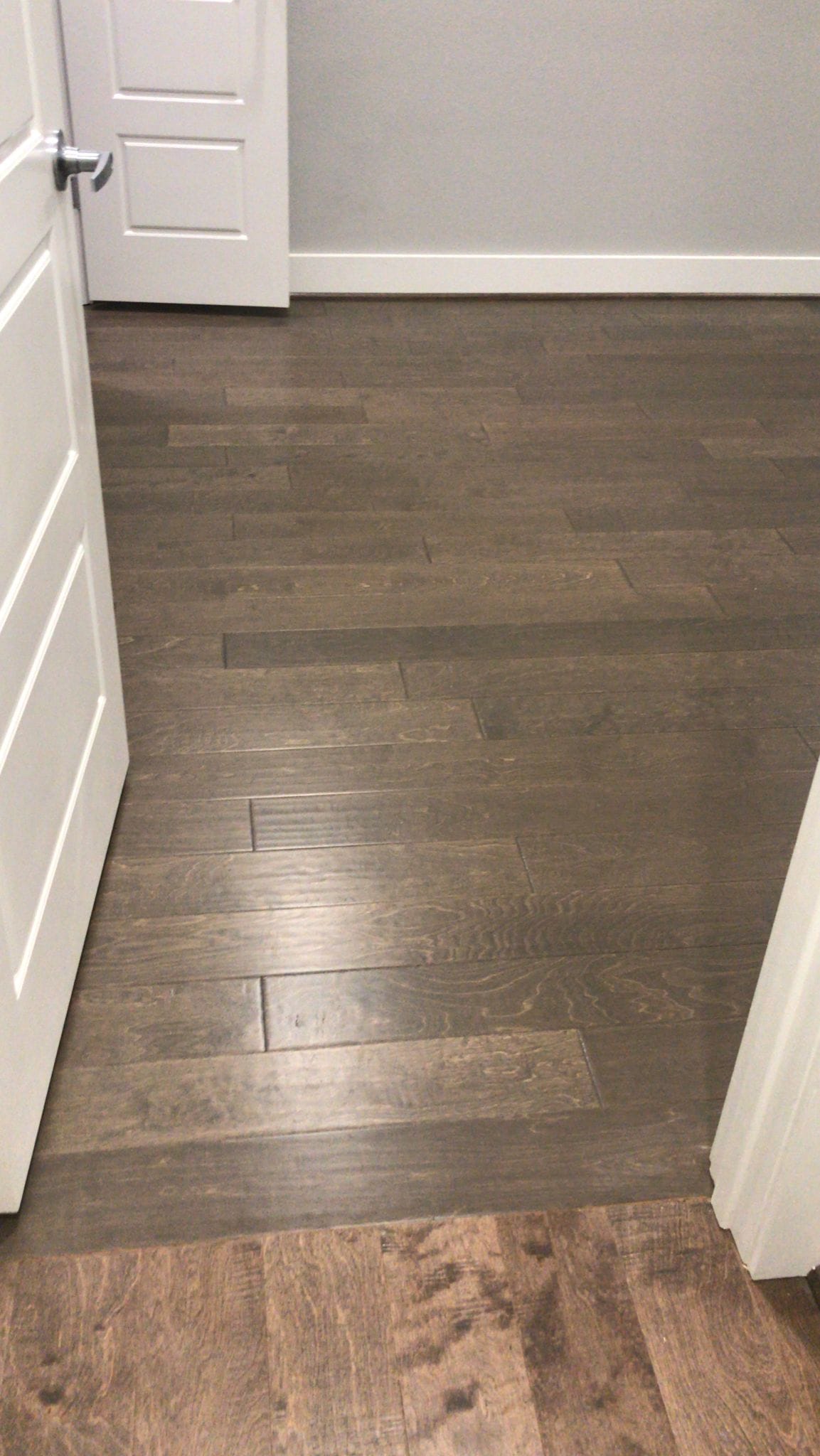
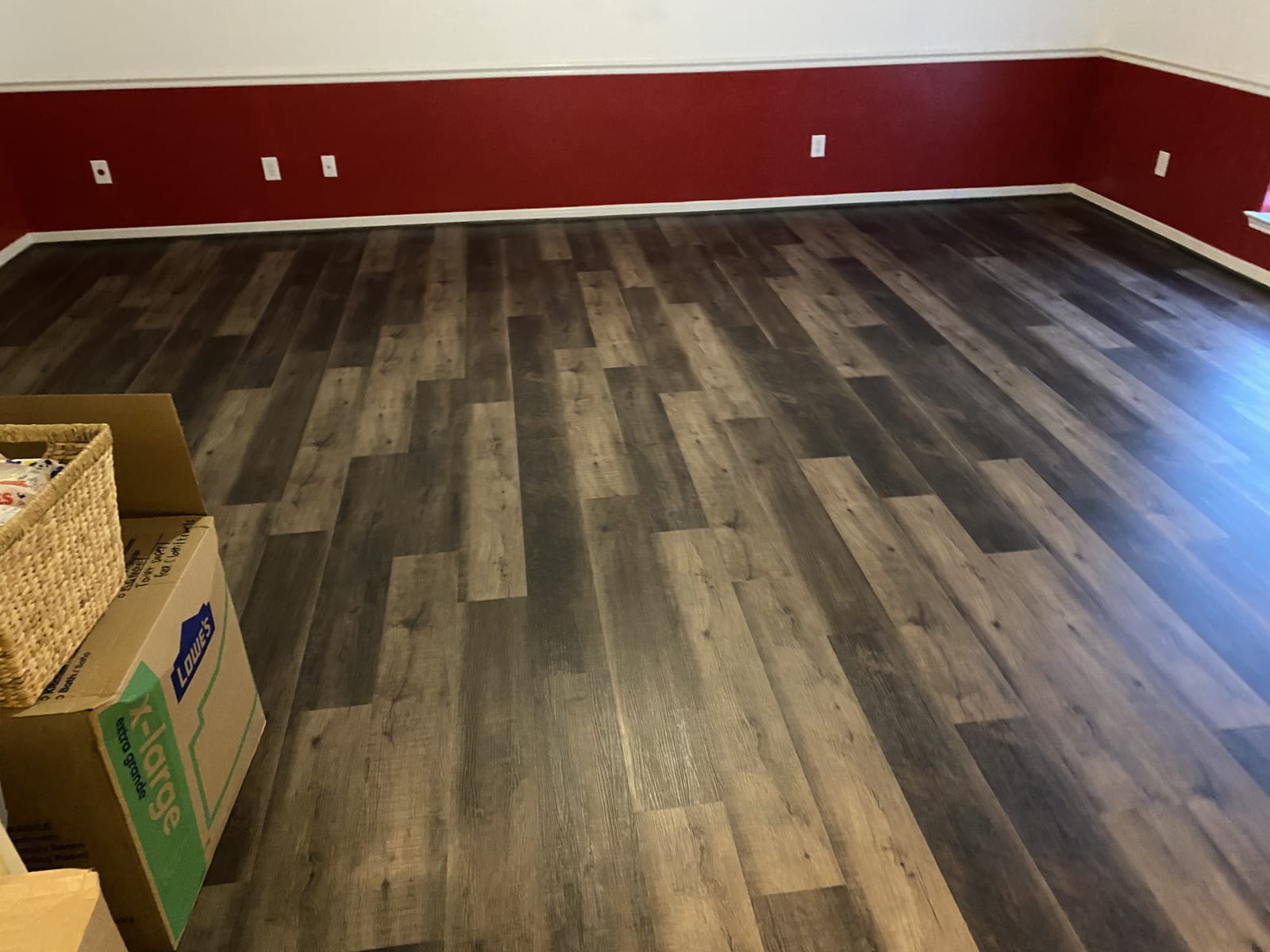
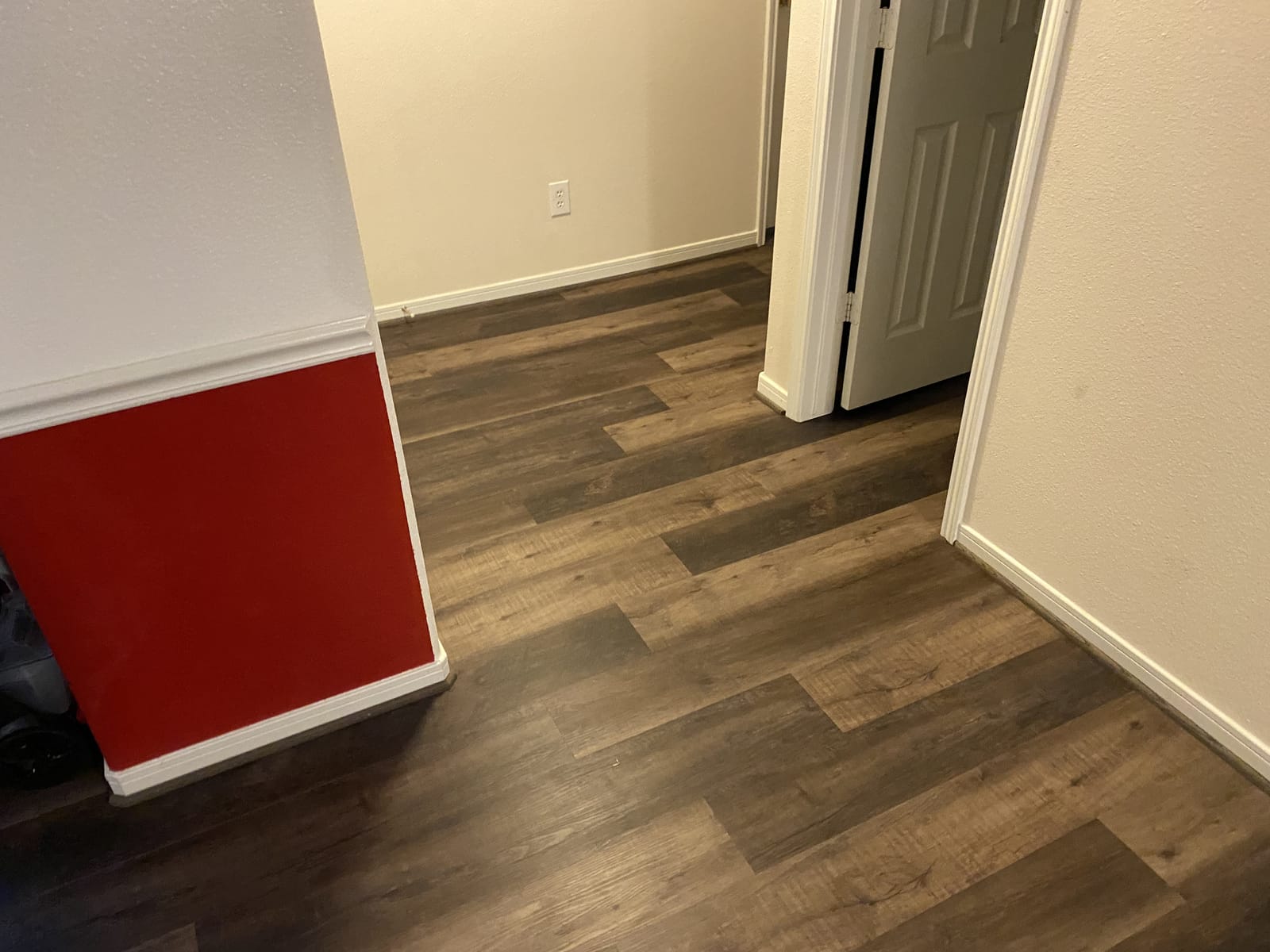
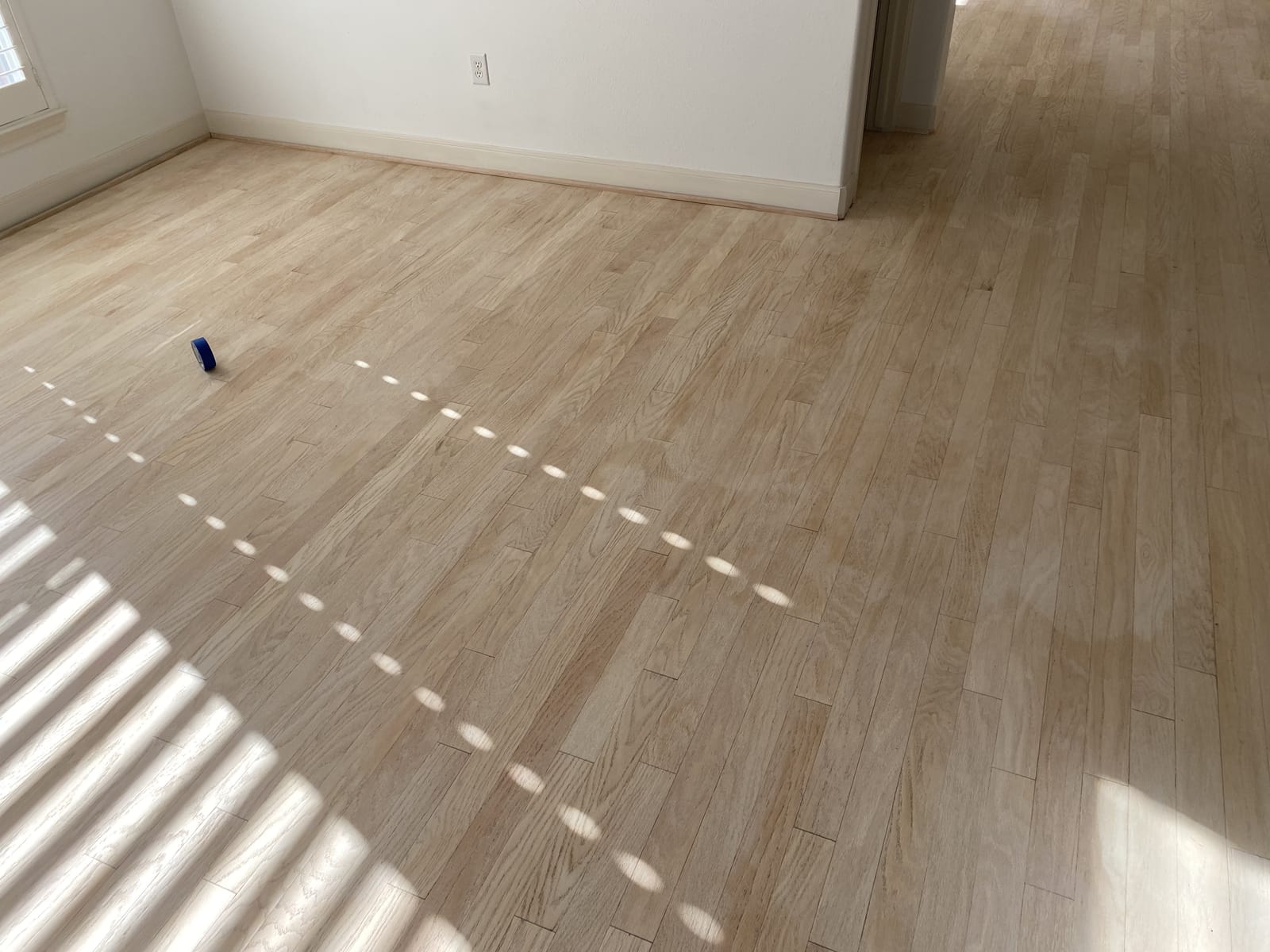
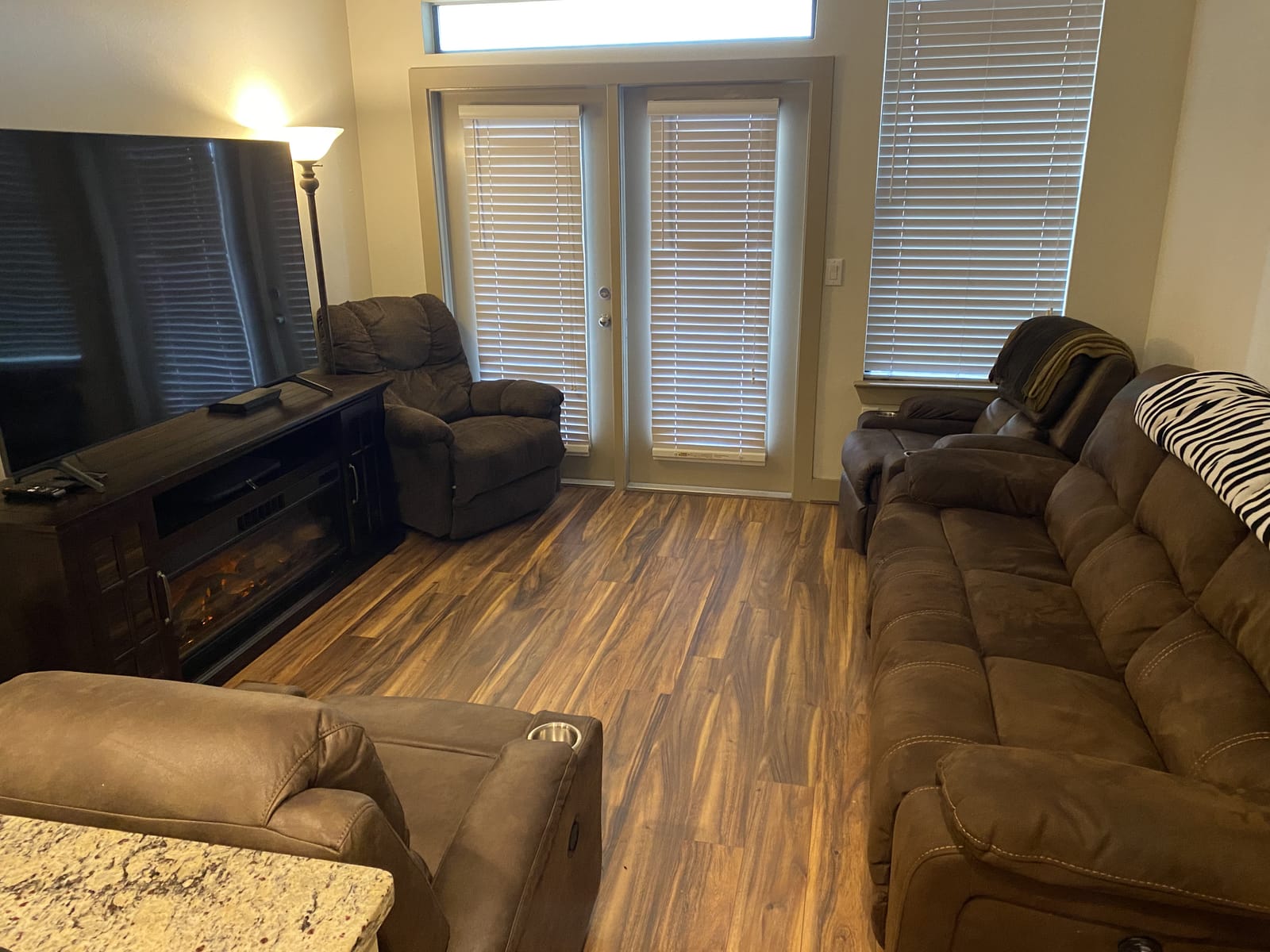
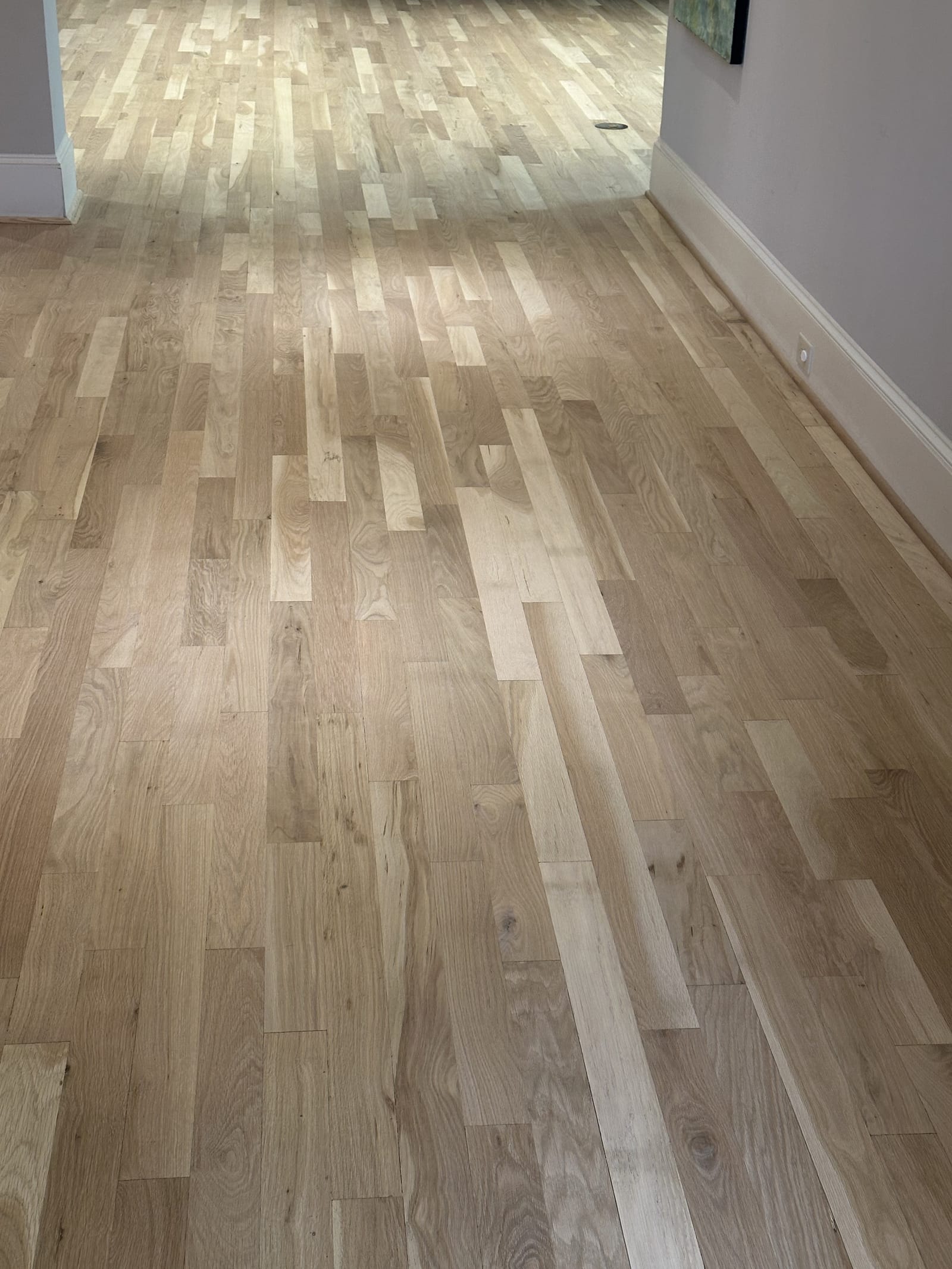
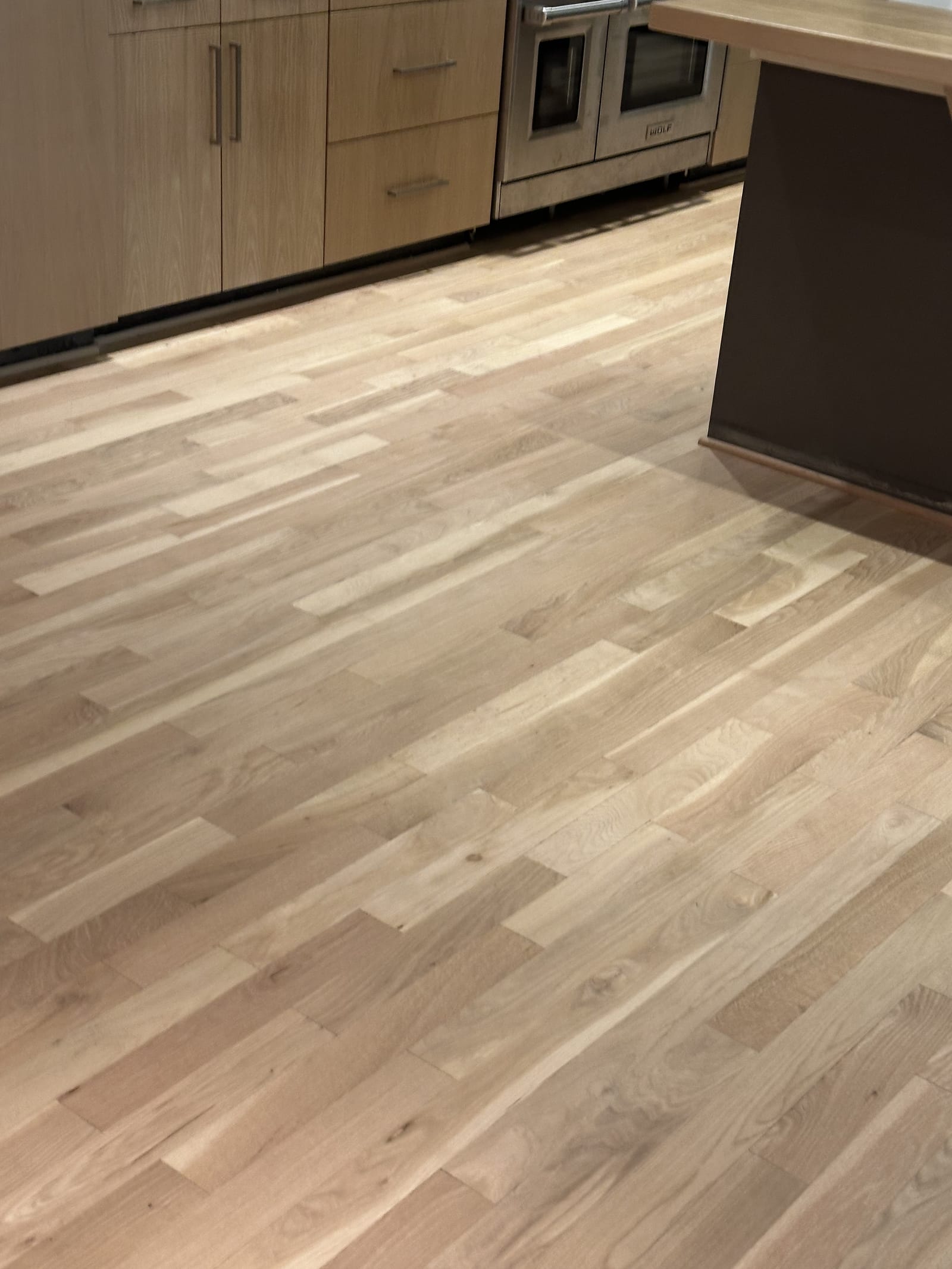
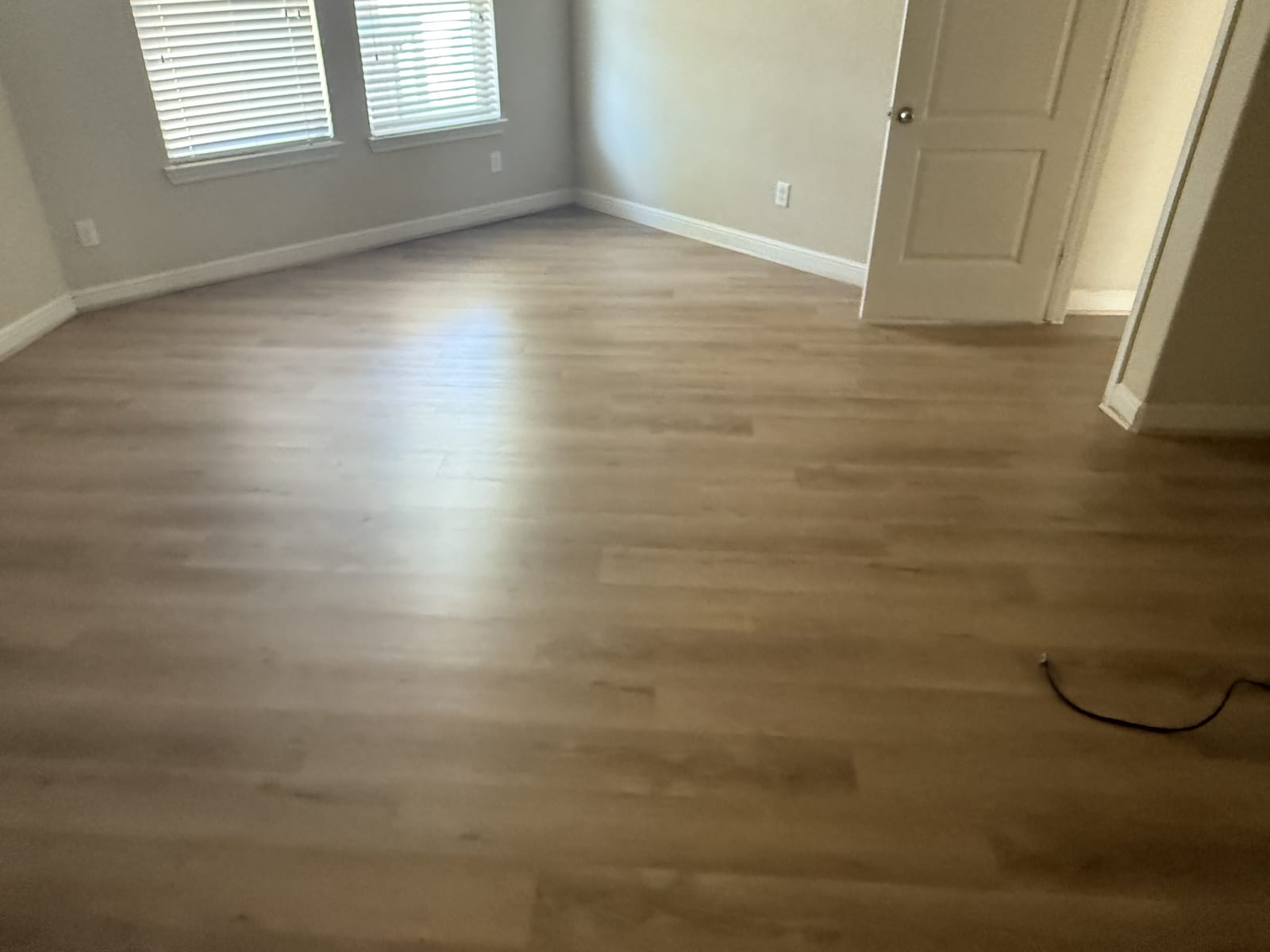
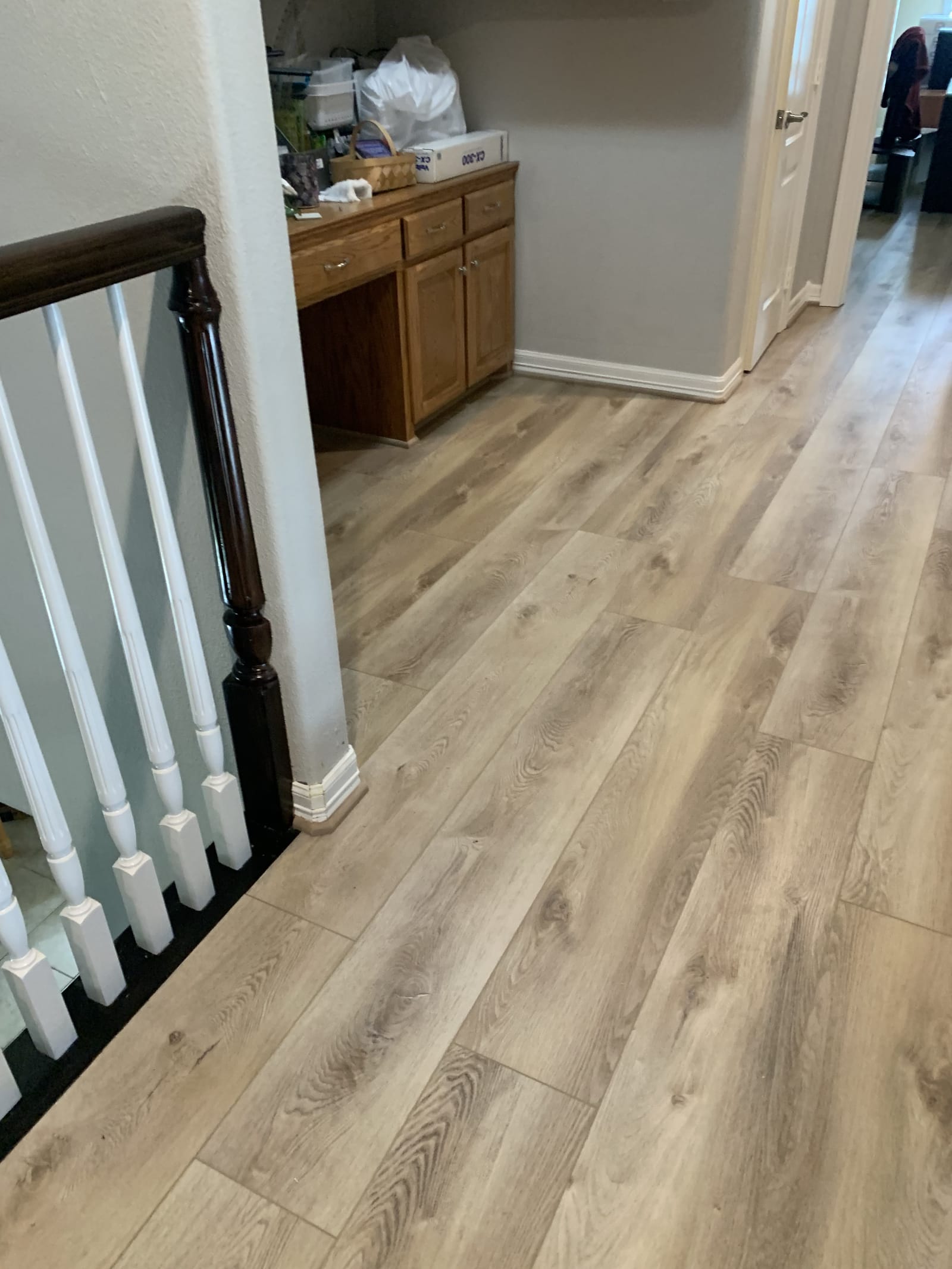
Waterproof Luxury Vinyl Plankwe’ve installed
Common questions
- Is waterproof vinyl plank actually waterproof?
- The plank is. The floor is not the same thing. A rigid-core LVP board can sit in standing water without swelling, which is why it beats laminate in a kitchen or bath. But water still travels through the seams to the slab or subfloor underneath, and if it sits there it will cause a problem regardless of what the plank is made of. For a full bathroom or a laundry room we'd rather use a sheet product or tile with a proper waterproof membrane.
- What wear layer should I ask for?
- 12-mil for a normal household, 20-mil if you have large dogs, kids, or you're flooring a rental. 6-mil and 8-mil products exist to hit an advertised price and they scuff visibly within a few years in a busy house. Any quote you get should state the mil rating in writing — if it just says 'luxury vinyl plank', you don't yet know what you're buying.
How we install it
Waterproof plank flooring — the workhorse choice for Houston-area homes.
Luxury Vinyl Plank & Laminate— what’s includedCompare other materials
- Laminate FlooringThe budget hard-surface option — realistic wood look, hard-wearing top layer, but a fibreboard core that hates water.$4–$7/sq ft
- Engineered HardwoodReal wood veneer over a dimensionally stable plywood core — the way to get a genuine wood floor onto a Houston slab.$9–$16/sq ft
- Solid HardwoodOne piece of wood, sandable for generations — right for pier-and-beam homes, wrong for most slabs in this region.$10–$18/sq ft
- Porcelain & Ceramic TileThe most durable and genuinely waterproof-capable floor available — and the one where installation quality shows most.$10–$20/sq ft
- Natural StoneTravertine, marble, slate, and limestone — genuinely unique material that asks for maintenance in return.$14–$28/sq ft
- Carpet & PadStill the right answer in bedrooms, media rooms, and rental turns — where warmth, quiet, and cost per foot matter most.$3.5–$7/sq ft