
Supplied & installed
Porcelain & Ceramic Tile
The most durable and genuinely waterproof-capable floor available — and the one where installation quality shows most.
Porcelain is a denser, harder, less porous version of ceramic, fired at higher temperature. For floors, showers, and anywhere that gets genuinely wet, it is the most durable surface you can buy — it does not care about water, it does not scratch under normal use, and a properly set tile floor will outlast several generations of everything else in the room.
It is also the material where the difference between a good installer and a cheap one is most visible, and most expensive to fix. Lippage between tiles, grout lines that wander, a large-format tile that rocks because the substrate wasn't flat, a shower that leaks in year three because the waterproofing was skipped — every one of those traces back to prep, not to the tile. You cannot buy your way out of a bad tile install with a better tile.
Modern porcelain also does wood-look and stone-look convincingly enough that it's a real alternative to both, with none of the moisture concerns.
Where it works
- Showers, tub surrounds, bathrooms, laundry rooms — anywhere water is expected
- Entries and mudrooms taking grit and wet shoes
- Kitchens, especially in houses where a wood-look tile gives the appearance without the risk
- Houses on well water, where a dense porcelain resists the mineral staining that marks up softer surfaces
- Pet households — it's effectively scratch-proof
Where it fails
- The substrate isn't flat. Large-format tile in particular needs the floor within about 1/8" over 10 feet, and a bouncy or uneven subfloor cracks tile no matter how good the tile is
- It's a pier-and-beam house with deflection that nobody addressed first — rigid material over a moving floor is a guaranteed crack
- Anyone skips the waterproof membrane in a shower to save a day. This is the most expensive corner cut in the trade
- You want a warm, quiet floor — tile is cold underfoot and loud, and neither is fixable after the fact
- The grout choice ignores the water source: standard cementitious grout in a well-water house will discolor
What it costs
- Supplied & installed
- $10–$20/sq ft
- Material only, if you buy your own
- $2–$7/sq ft
Includes tile, setting material, grout, delivery, substrate flattening, layout, demolition and disposal of the existing floor. Herringbone, large-format, and complex layouts sit at the top of the range because the labor genuinely is higher. Shower waterproofing is quoted as its own scope.
What we supply
Tile, mortar matched to the tile and substrate, grout, membrane, and trim — with overage calculated for cuts and waste rather than ordered exactly to square footage, which is how people end up short a box of a discontinued lot on the last day.
What to ask any bidder
The specifications that decide whether this floor lasts — and the ones that rarely make it onto a quote.
- Substrate flatness tolerance for large-format tile (any side over 15") is roughly 1/8" in 10 feet. Most slabs don't meet it as poured. Flattening is the job, and a quote that doesn't mention it hasn't accounted for it.
- Uncoupling membrane between slab and tile absorbs minor slab movement and is cheap insurance against cracking in this soil.
- Showers need a proper waterproof membrane system — sheet or liquid-applied. Cement board alone is not waterproofing, and this is the single most common failure we're called in to fix.
- Epoxy grout costs more, doesn't need sealing, and won't stain — worth it in showers and in houses on well water with high iron.
- Rectified tile has mechanically finished edges allowing very narrow grout joints; non-rectified needs wider joints to absorb size variation. Specifying a 1/16" joint on non-rectified tile guarantees a bad-looking floor.
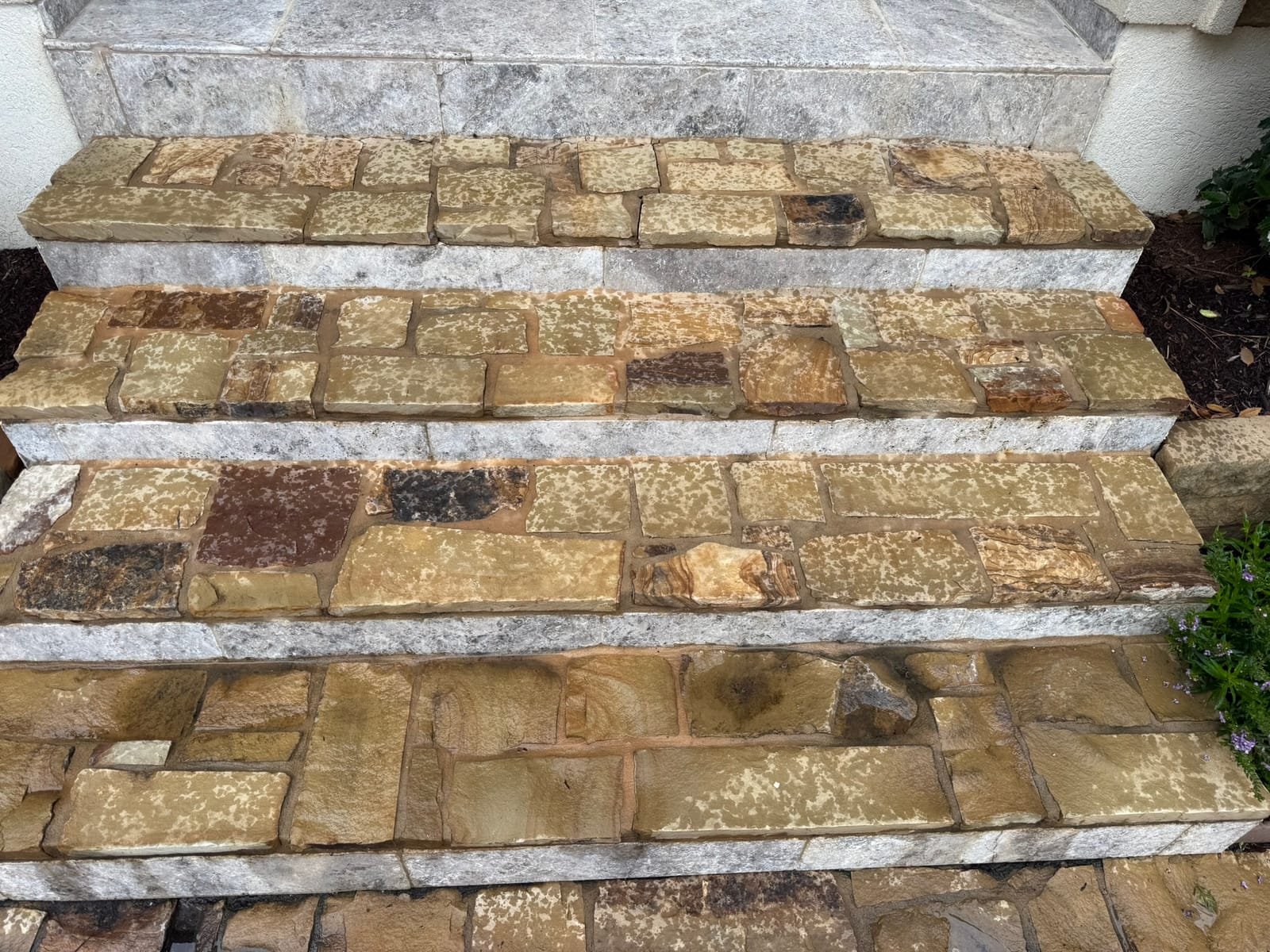
Porcelain & Ceramic Tilewe’ve installed
Common questions
- Why does tile installation cost so much more than vinyl plank?
- Because most of the cost is labor and prep, not the tile. A plank floor floats over a slab that's roughly flat; tile is rigidly bonded to it, so the slab has to be made genuinely flat first — and that grinding, patching, and self-leveling is real work. Then there's layout, cutting, setting, curing, grouting, and cleanup, across multiple days. The tile itself is often the cheapest part of a tile job. What you're paying for is the substrate underneath it, which is also why the cheapest tile bid is usually the one that skipped that step.
- Can you tile over my existing tile?
- Sometimes, and it's worth asking about because it saves demolition cost and mess. It works when the existing tile is well bonded with no hollow spots, the height increase doesn't create problems at doors and transitions, and the total assembly isn't too heavy for the structure. We sound the existing floor for hollow areas before committing. Where it doesn't work, we'll say so — bonding new tile to a floor that's already releasing just moves the failure a year down the road.
How we install it
Porcelain, ceramic, and natural stone — floors, showers, and backsplashes.
Tile & Stone— what’s includedCompare other materials
- Waterproof Luxury Vinyl PlankThe default floor for Houston-area homes — waterproof, dimensionally stable on slab, and forgiving of humidity.$5–$9/sq ft
- Laminate FlooringThe budget hard-surface option — realistic wood look, hard-wearing top layer, but a fibreboard core that hates water.$4–$7/sq ft
- Engineered HardwoodReal wood veneer over a dimensionally stable plywood core — the way to get a genuine wood floor onto a Houston slab.$9–$16/sq ft
- Solid HardwoodOne piece of wood, sandable for generations — right for pier-and-beam homes, wrong for most slabs in this region.$10–$18/sq ft
- Natural StoneTravertine, marble, slate, and limestone — genuinely unique material that asks for maintenance in return.$14–$28/sq ft
- Carpet & PadStill the right answer in bedrooms, media rooms, and rental turns — where warmth, quiet, and cost per foot matter most.$3.5–$7/sq ft