
Supplied & installed
Natural Stone
Travertine, marble, slate, and limestone — genuinely unique material that asks for maintenance in return.
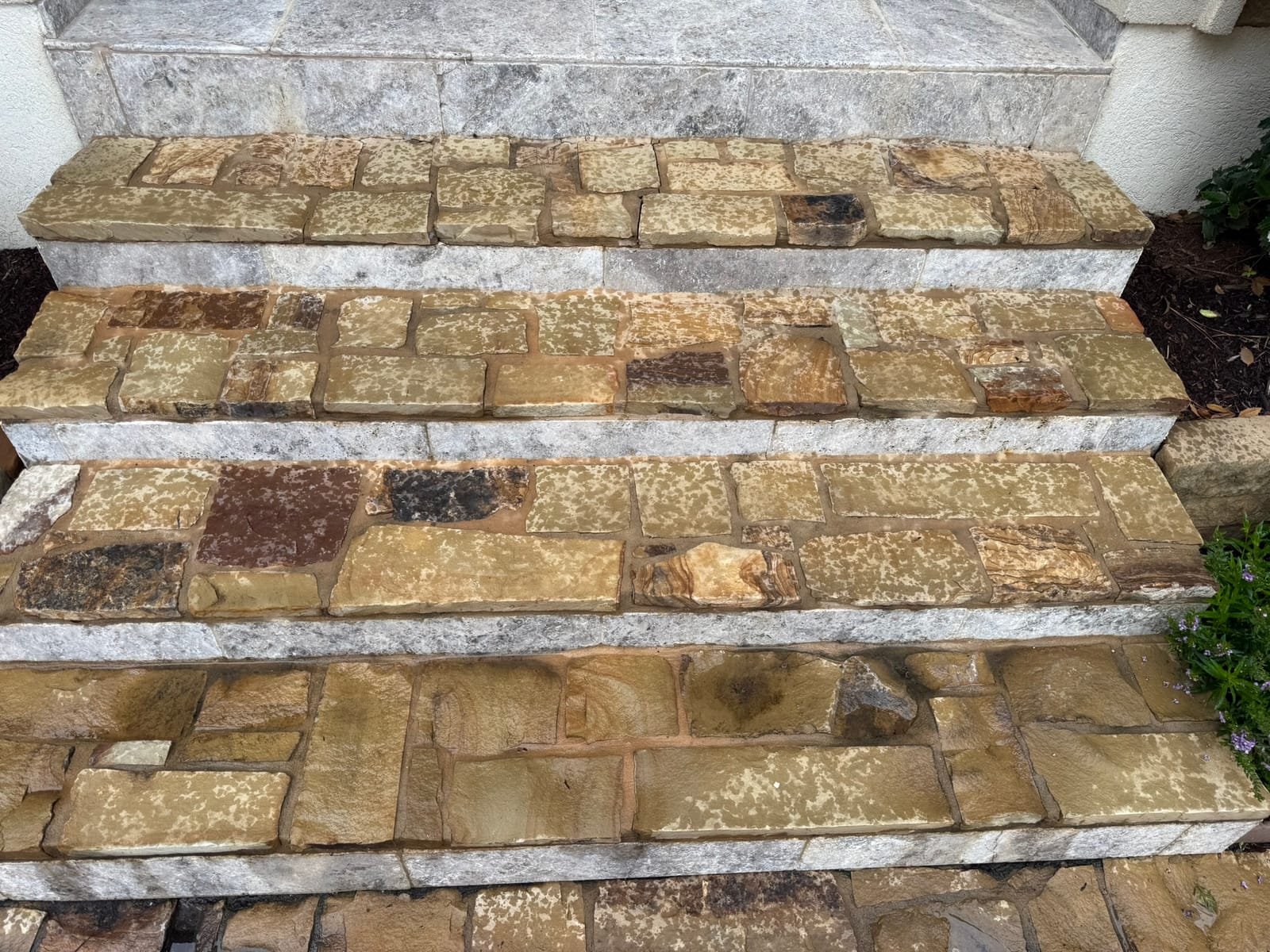
Natural stone is quarried, not manufactured, so no two pieces match and the floor has a depth that printed materials approximate but don't equal. In entries, on stair treads, around pools, and in high-end baths it does something porcelain can't quite.
It also behaves like a natural material, which is the part showrooms undersell. Most stone is porous and needs sealing, on a schedule, for the life of the floor. Marble and limestone etch on contact with anything acidic — lemon juice, wine, some common cleaners — and etching is physical damage to the surface, not a stain you can clean off. Slate flakes if you pick the wrong grade. Travertine has natural voids that come filled from the factory and can pop out later.
None of that is a reason to avoid it. It's a reason to go in knowing what you're signing up for, and to pick the right stone for the room rather than the prettiest sample in the shop.
Where it works
- Entries, foyers, and stair treads where the material makes an impression
- Exterior steps, patios, and pool surrounds — with the right stone and finish
- Master baths, where the owner wants material rather than a print of material
- Houses where the architecture genuinely calls for it and porcelain would read as an imitation
Where it fails
- It's marble or limestone in a kitchen. Acidic spills etch the surface permanently, and a kitchen is where acidic spills happen
- Nobody keeps up with sealing. An unsealed porous stone absorbs stains and there is no undoing it
- It's polished stone in a wet area — polished marble underfoot in a shower is a fall waiting to happen
- The house is on well water with high iron and the grout wasn't specified for it
- It goes over a substrate with any deflection; stone is less forgiving than porcelain, not more
What it costs
- Supplied & installed
- $14–$28/sq ft
- Material only, if you buy your own
- $6–$18/sq ft
Includes stone, setting material, grout, sealer and initial sealing, delivery, substrate preparation, layout, and demolition. The spread is wide because the material spread is wide — a basic tumbled travertine and a book-matched marble are not the same purchase.
What we supply
Stone, mortar, grout, and the correct sealer for the specific material, plus generous overage — natural stone varies lot to lot and matching a shortfall later is often impossible rather than merely inconvenient. We dry-lay and arrange for variation before setting anything, so the color range is distributed across the floor instead of pooling in one corner.
What to ask any bidder
The specifications that decide whether this floor lasts — and the ones that rarely make it onto a quote.
- Seal before grouting on porous stone, or the grout will stain the tile face permanently.
- Honed and tumbled finishes are far safer underfoot when wet than polished, and hide etching much better. In a bath, honed is almost always the right call.
- Travertine's natural voids come factory-filled; over time some fills release and need refilling. It's maintenance, not a defect.
- Slate must be specified as a hard, non-flaking grade — cheap slate delaminates in sheets.
- Sealing is a recurring obligation, typically every 1–3 years depending on the stone and the traffic. Ask what the schedule is before you buy, not after.
- For exterior use in this region, freeze-thaw isn't the concern; slip resistance and heat absorption are. A dark polished stone around a pool gets genuinely too hot to walk on.
Natural Stonewe’ve installed
Common questions
- How often does natural stone need to be sealed?
- Typically every one to three years, depending on the stone's porosity and how much traffic and water it sees. A tumbled travertine entry needs it more often than a dense honed granite. We seal on installation and tell you what the specific stone you chose will want going forward. If nobody has told you a sealing schedule, you haven't been sold the whole picture — an unsealed porous stone takes stains that cannot be removed.
- Should I use marble in my kitchen?
- Honestly, usually not — and we'd say the same about limestone. Both are calcium-based and etch on contact with anything acidic: lemon juice, vinegar, wine, tomato, several common cleaners. Etching is a dulled mark physically eaten into the surface, not a stain sitting on top, so cleaning doesn't fix it. Some people love the patina that develops and choose it knowingly. If you'd be upset by the first mark, a porcelain that reproduces the look will make you much happier for years two through twenty.
How we install it
Porcelain, ceramic, and natural stone — floors, showers, and backsplashes.
Tile & Stone— what’s includedCompare other materials
- Waterproof Luxury Vinyl PlankThe default floor for Houston-area homes — waterproof, dimensionally stable on slab, and forgiving of humidity.$5–$9/sq ft
- Laminate FlooringThe budget hard-surface option — realistic wood look, hard-wearing top layer, but a fibreboard core that hates water.$4–$7/sq ft
- Engineered HardwoodReal wood veneer over a dimensionally stable plywood core — the way to get a genuine wood floor onto a Houston slab.$9–$16/sq ft
- Solid HardwoodOne piece of wood, sandable for generations — right for pier-and-beam homes, wrong for most slabs in this region.$10–$18/sq ft
- Porcelain & Ceramic TileThe most durable and genuinely waterproof-capable floor available — and the one where installation quality shows most.$10–$20/sq ft
- Carpet & PadStill the right answer in bedrooms, media rooms, and rental turns — where warmth, quiet, and cost per foot matter most.$3.5–$7/sq ft