Almost every home we work in around Montgomery County and Houston sits on a concrete slab-on-grade foundation, in one of the most humid climates in the country. That single fact should drive your flooring decision more than the showroom sample does — because the slab and the humidity quietly reward some materials and punish others.
Here's how the common choices actually hold up on a Gulf Coast slab.
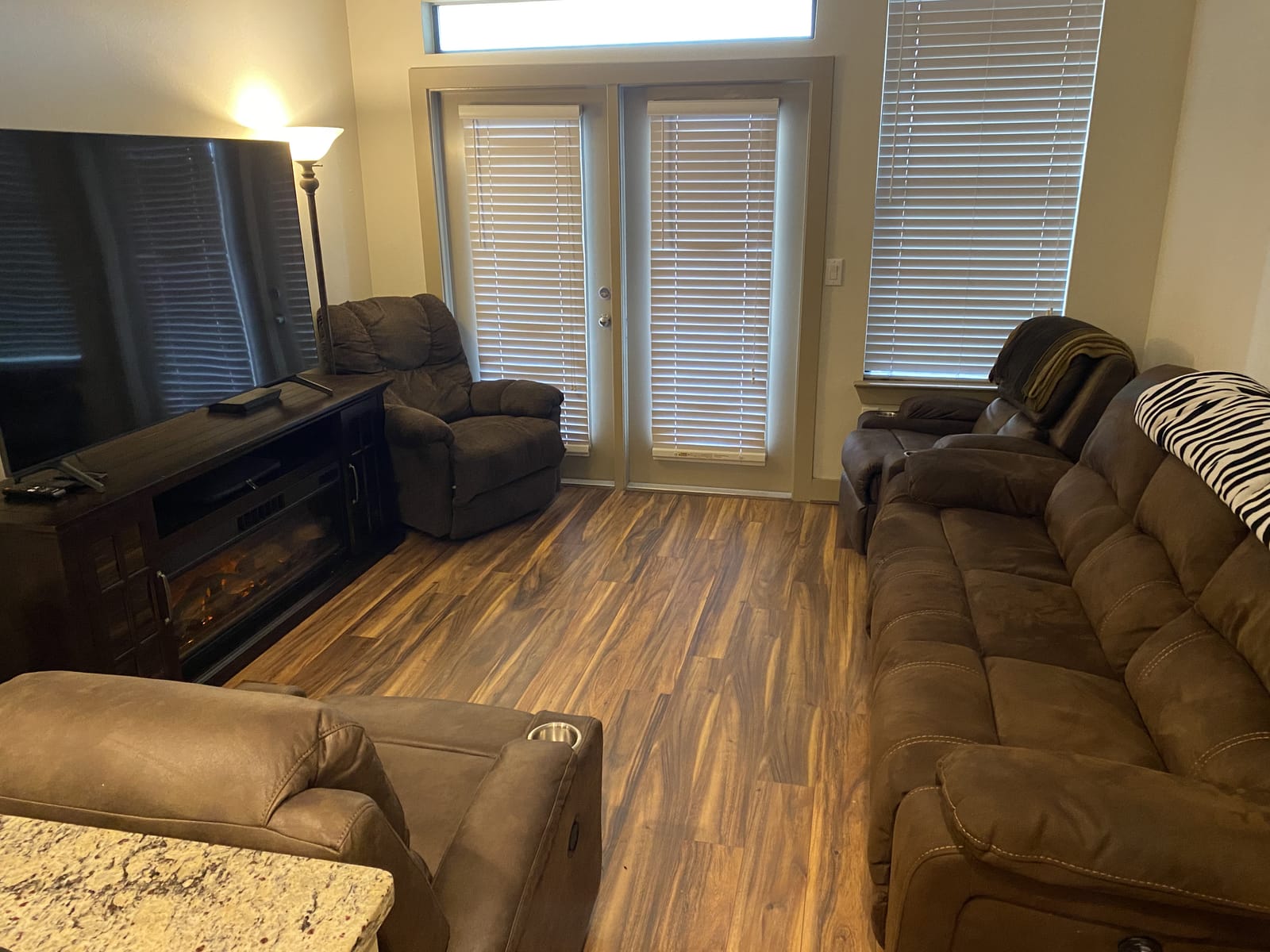
Luxury vinyl plank (LVP): the workhorse
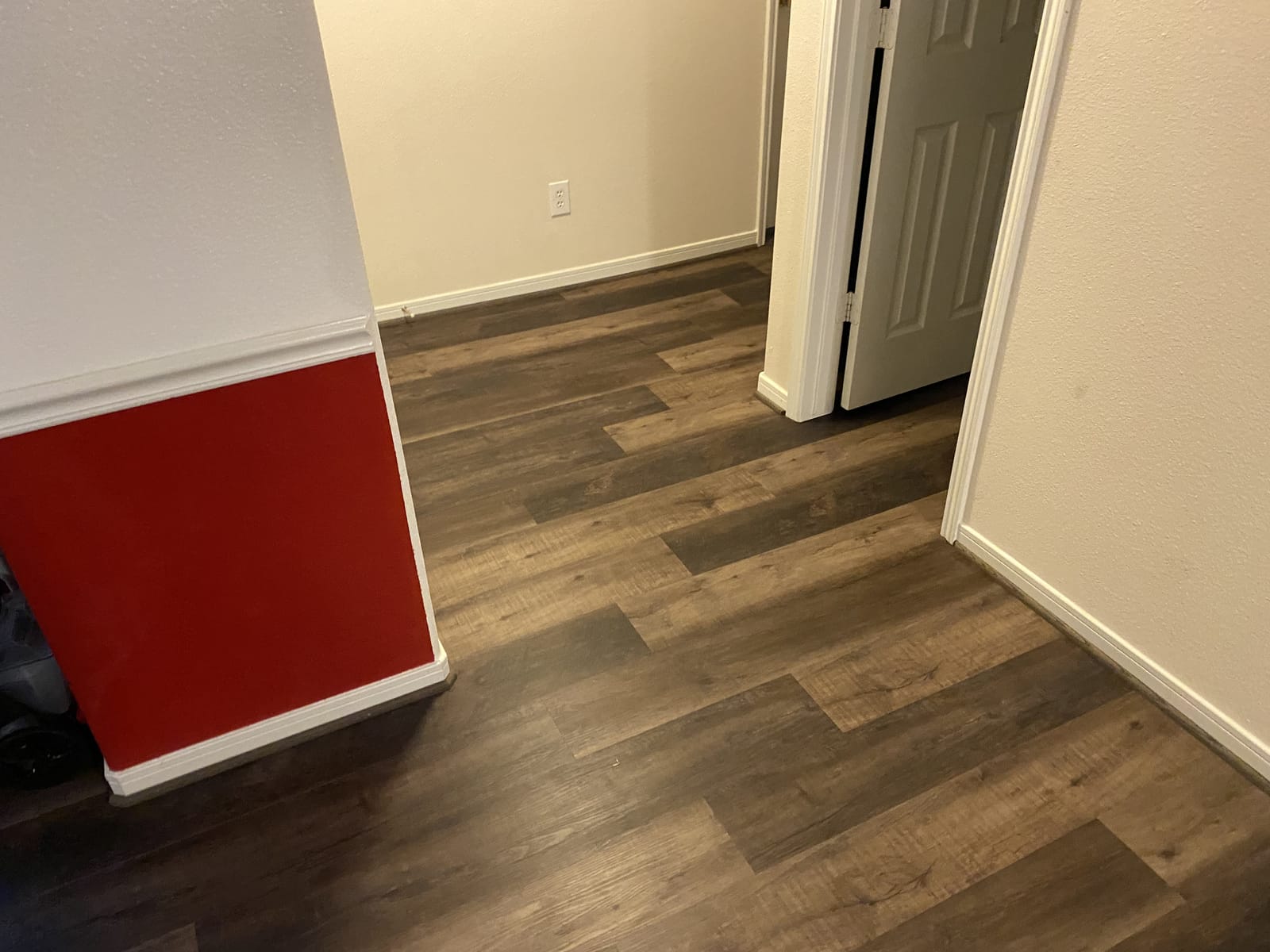
For most Houston-area homes, LVP is the sensible default, and it's the most-installed floor we do. It's waterproof, it shrugs off kids and dogs, and — critically — it's dimensionally stable enough to sit on a slab that moves and breathes with the seasons.
The catch people miss: LVP is only as flat as what's under it. On a wavy slab, a floating LVP floor will telegraph every high and low spot, and a run that's too long without an expansion break can buckle in August heat. Done over properly prepped, flat substrate, it's hard to beat for the money.
Best for: whole-home installs, high-traffic areas, rentals, families, anyone who wants low fuss.
Tile and stone: beautiful, but it lives or dies on prep
Porcelain and ceramic tile are excellent on a slab — they don't care about moisture, and they last decades. Tile is also where installation quality shows up most: lippage (uneven edges), cracked grout lines, and a shower that leaks in three years all come from rushed substrate work, not from the tile itself.
Large-format tile in particular needs a genuinely flat substrate, or the corners lift. And on a slab with any movement, an uncoupling membrane is what keeps a hairline slab crack from becoming a cracked tile.
Best for: wet areas, entryways, kitchens, and anyone who wants a floor that outlasts the house — as long as the prep is done right.
Hardwood: yes, but know which kind
This is where the slab really matters.
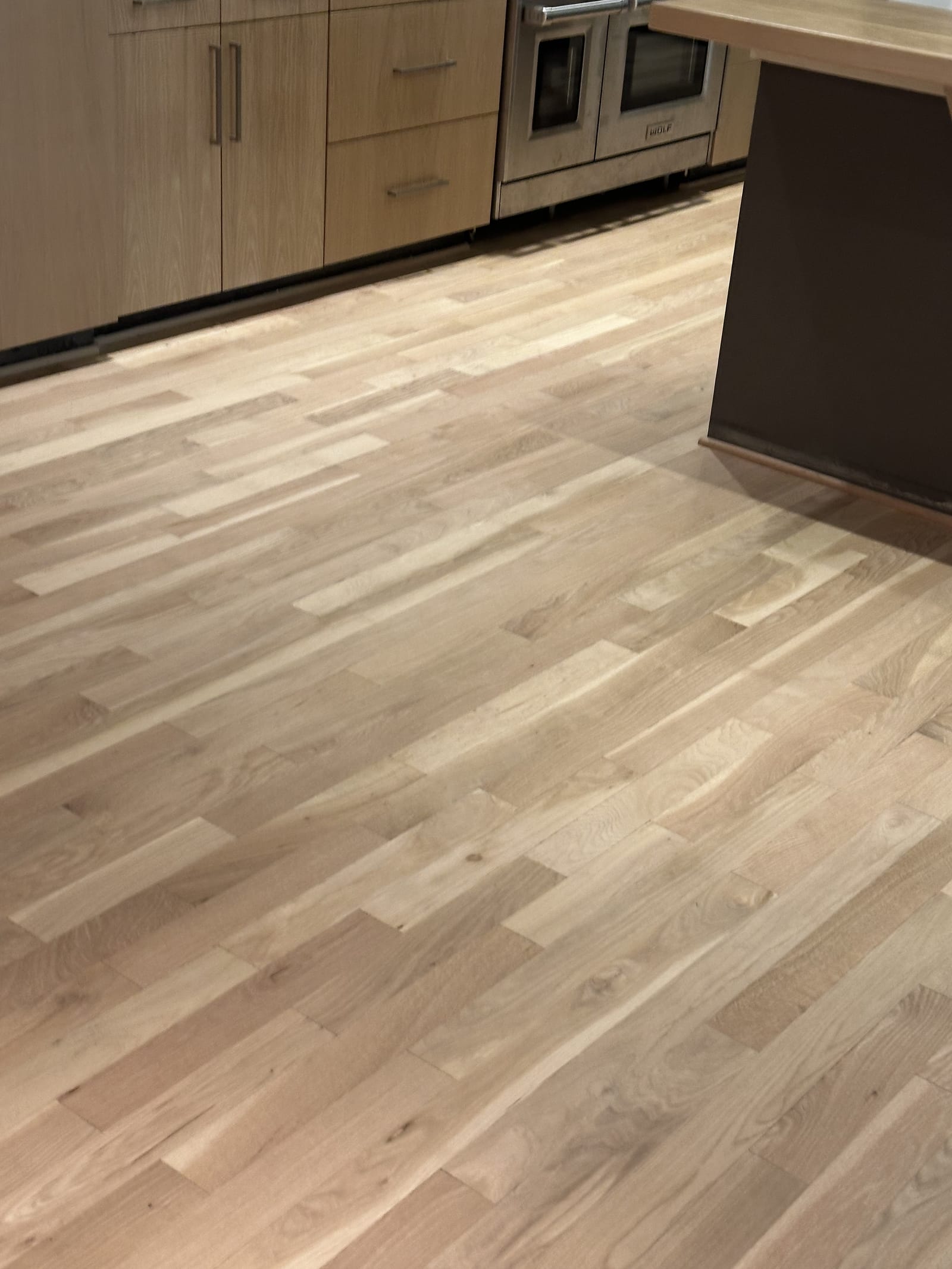
Solid hardwood wants to be nailed to a wood subfloor. On a slab, that means building a sleeper system or plywood layer first, and even then, solid wood's seasonal movement fights our humidity swings. We rarely recommend it directly on Houston slabs.
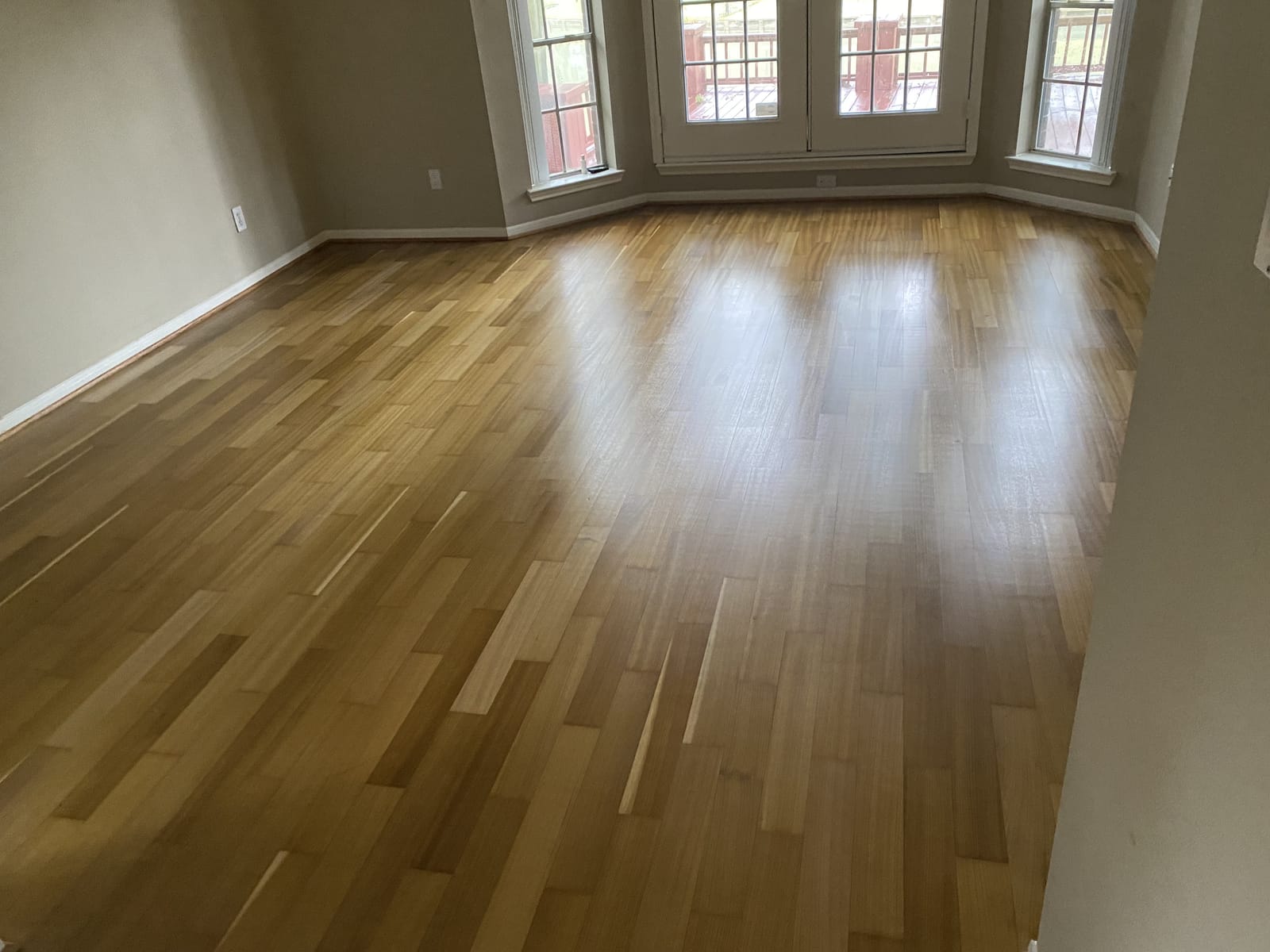
Engineered hardwood is the answer that works here. Its layered construction is far more stable, and it can be glued directly to a properly prepped, moisture-tested slab. You get a real wood floor that behaves itself in our climate.
Best for: homeowners who want genuine wood and warmth — go engineered, glued down, with the moisture testing done first.
Already have hardwood? Consider refinishing
If your home has existing solid wood floors that are structurally sound and have enough wear layer left, refinishing costs a fraction of replacement and takes a few days. Sand to bare wood, repair the damaged boards, and put down a fresh finish. It's the most overlooked value in flooring.
Carpet still has a place
Bedrooms, media rooms, stairs, and rental turns are all still good candidates for carpet — it's warm, quiet, and affordable. Power-stretched properly, it won't ripple in eighteen months.
The one step that matters no matter what you pick
Whatever goes on top, the outcome is decided underneath. Before we install anything, we test the slab for moisture and flatten what needs flattening. It's the step most bidders skip to look cheaper, and it's the reason most Houston-area floors that fail, fail.
Not sure which is right for your rooms?
Tell us the space and the situation and we'll give you a straight recommendation — including when the cheaper material is the smarter call. Request a free in-home measure, or read more about each option on our services page. We install across Montgomery County and the greater Houston area.