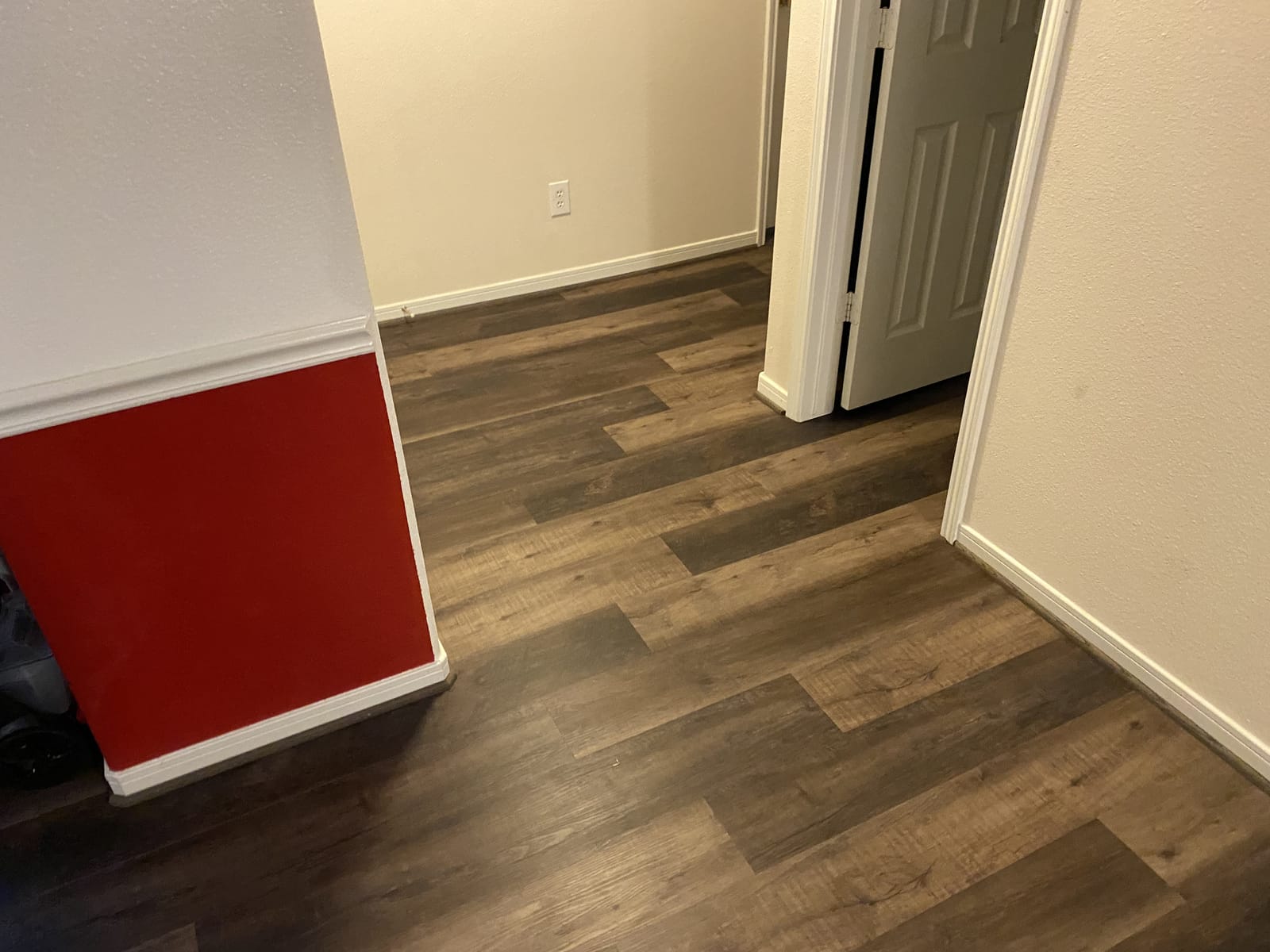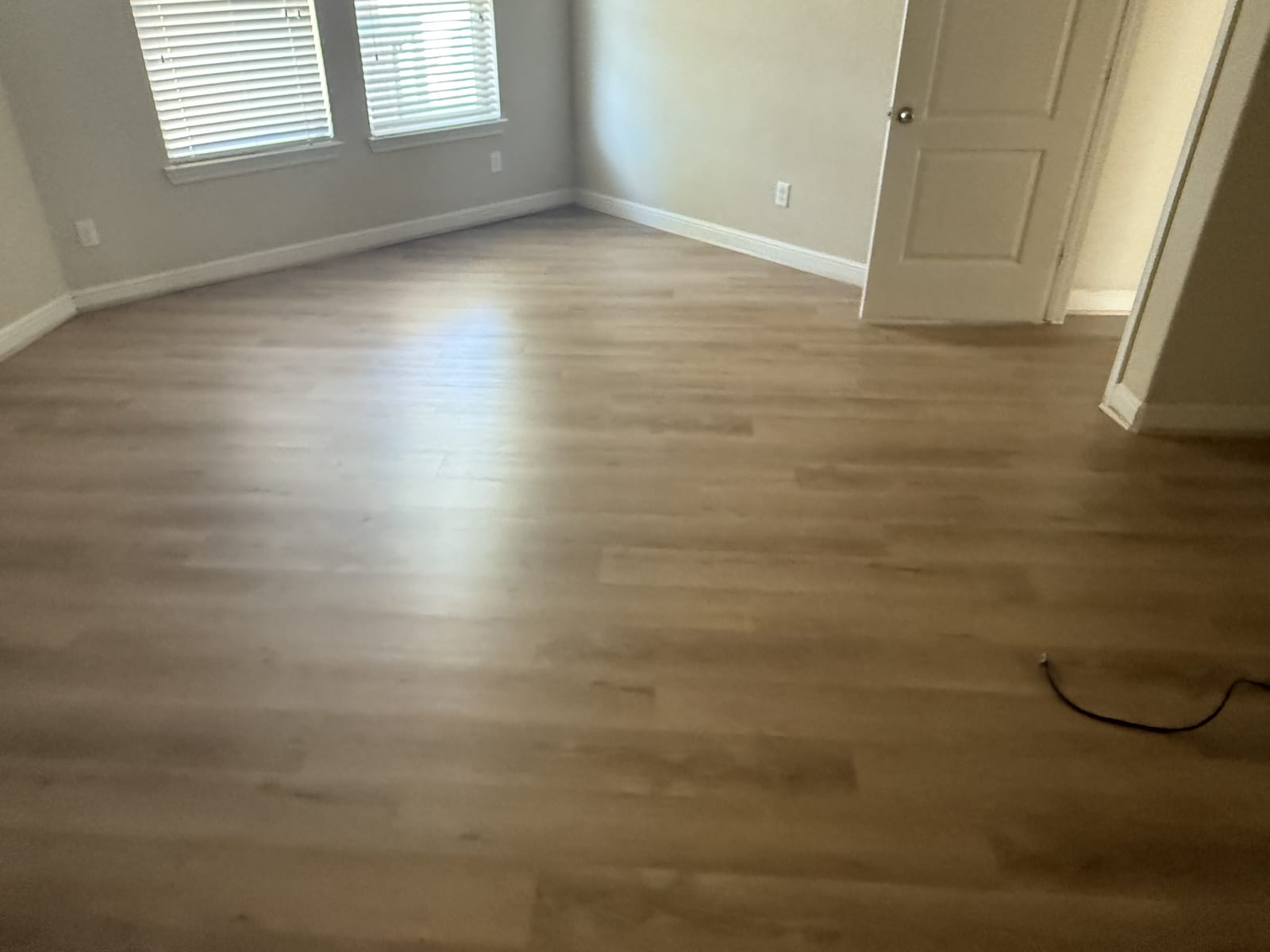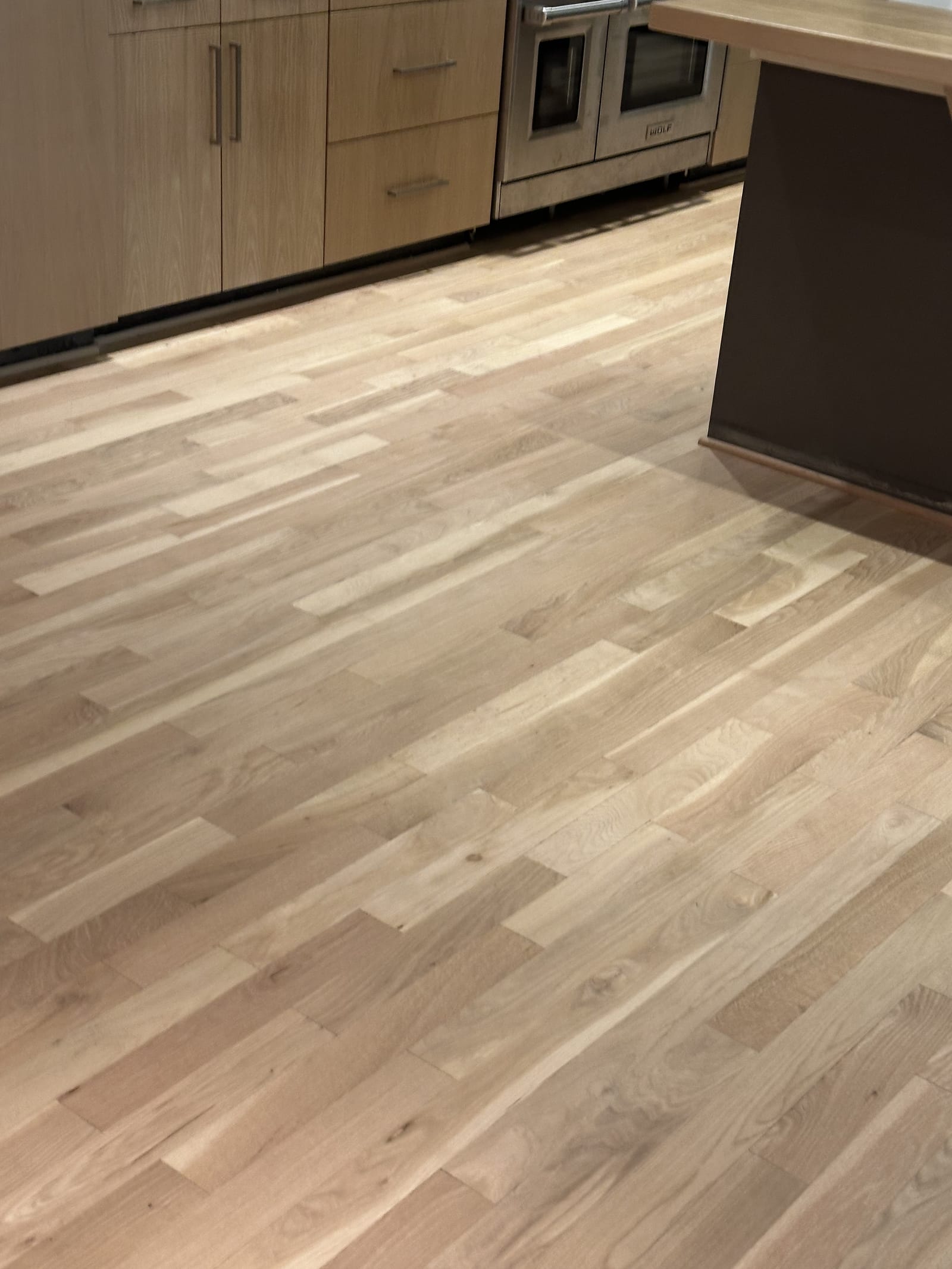
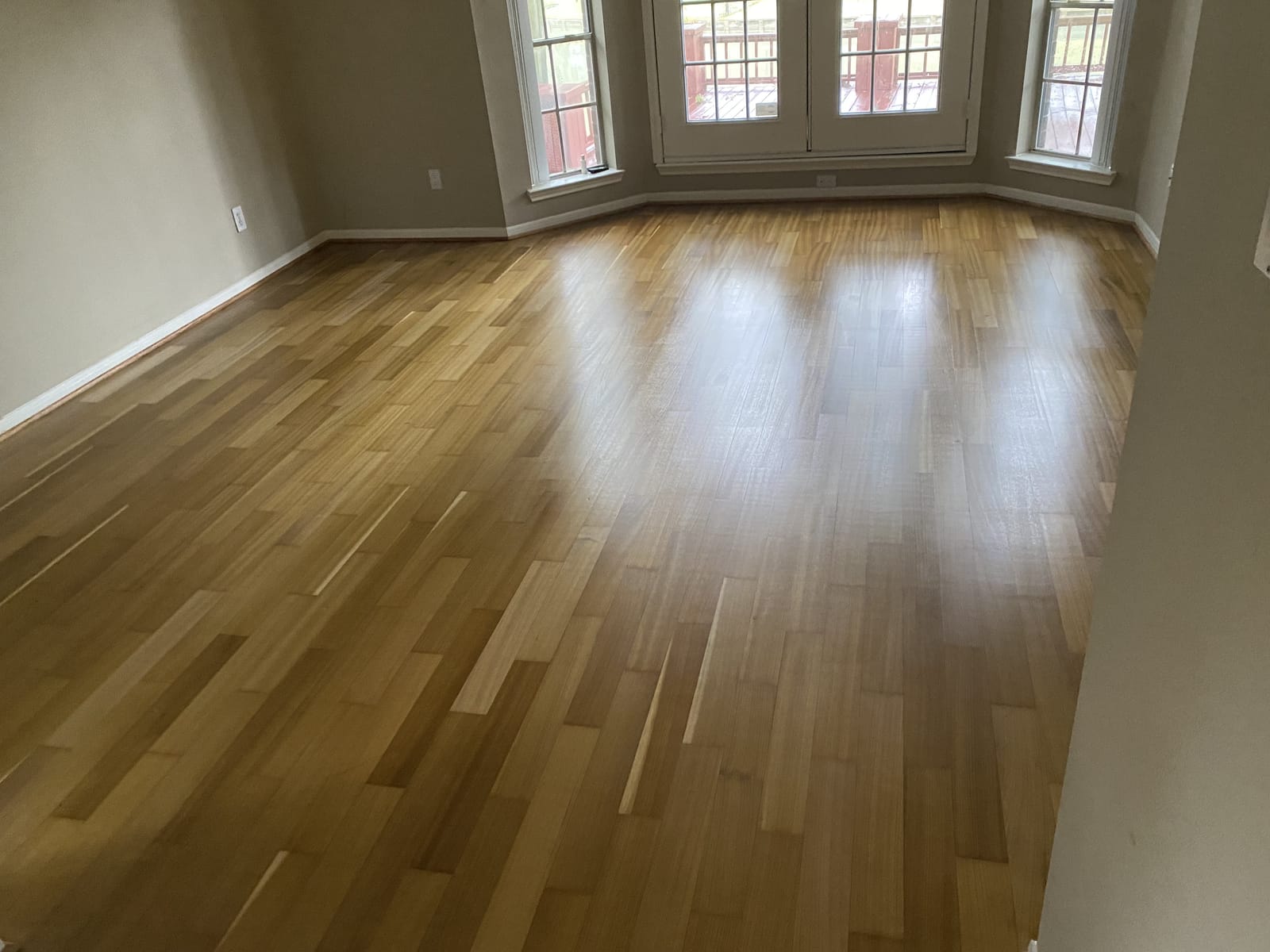
The honest answer to "what does new flooring cost?" is that it depends on three things: the material you pick, how many square feet you're covering, and how much has to happen before the new floor goes down. That last one is where most surprise numbers come from — and it's the part a phone quote can't see.
Here's a straight look at what flooring actually runs in the Houston area in 2026, with the material and the labor separated so you can see where the money goes.
Typical installed price ranges
These are all-in ranges — material plus delivery plus labor — for a standard installation in a Montgomery County or greater-Houston home. They assume a reasonably flat slab in decent shape. Prep, tear-out, and stairs are extra, and they're covered further down.
| Material | Material only | Supplied & installed | | --- | --- | --- | | Carpet & pad | $1.50 – $4 | $3.50 – $7 | | Laminate | $1.50 – $3.50 | $4 – $7 | | Luxury vinyl plank (LVP) | $2 – $5 | $5 – $9 | | Engineered hardwood | $4 – $10 | $9 – $16 | | Porcelain or ceramic tile | $2 – $7 | $10 – $20 | | Solid hardwood | $5 – $12 | $10 – $18 | | Natural stone | $6 – $18 | $14 – $28 |
Two things jump out of that table once you look at it properly.
The first is that the material is rarely the expensive part. On a tile job the tile itself might be a quarter of the total. What you're actually buying is the substrate work underneath it and the hours it takes to set it correctly. That's why the cheapest tile bid is so often the one that skipped the flattening — the tile line item looks the same on both quotes, and the difference is hidden in labor nobody itemized.
The second is that laminate is barely cheaper than LVP installed, even though the material is meaningfully cheaper. The labor, tear-out, prep, and trim are nearly identical on both, and those are most of the job. By the time both quotes are written, laminate often comes in about a dollar a square foot under a genuinely waterproof plank. That's worth knowing before you choose it purely on price.
Where each material actually lands
Ranges are only useful if you know which end of them you're on.
Carpet sits at the bottom of its range with a builder-grade polyester and a thin pad, and at the top with a solution-dyed nylon over a 6–8 pound density pad. The difference in how long the traffic lanes hold up is roughly double. Stairs are priced per tread, not by area, because a flight is several times the labor of the same square footage of open floor.
Luxury vinyl plank is driven almost entirely by wear layer. A 6-mil product hits the bottom of the range and looks scuffed in the traffic lanes within three or four years. A 20-mil commercial-grade plank sits at the top and lasts three times as long. If a quote just says "LVP," you don't yet know which one you're buying — ask for the mil rating in writing.
Engineered hardwood is driven by veneer thickness. A 2mm wear layer can never be sanded, so the floor has a fixed life. A 4–6mm sawn face can be refinished two or three times and outlives the mortgage. Two floors that look identical on a sample board can differ by a factor of three in useful lifespan, and the spec sheet is the only place that shows.
Tile is driven by format and layout. A standard 12x24 in a running bond is at the low end. Large-format, herringbone, or anything requiring a leveling system across a big field is at the top, because the labor genuinely is higher and the substrate tolerance is tighter.
Solid hardwood belongs in pier-and-beam homes — the historic parts of Montgomery and Tomball — where there's a real wood subfloor to nail into. Over a slab it needs a plywood or sleeper system first, which adds cost and raises every threshold in the house. In most Houston-area homes engineered is the better engineering answer, not merely the cheaper one.
Natural stone has the widest spread of anything on the list because the material spread is enormous. A tumbled travertine and a book-matched marble are not the same purchase. Add sealing on a recurring schedule for the life of the floor.
Refinishing instead of replacing
If you already have solid hardwood that's structurally sound, this is the most overlooked value in flooring.
A full sand and refinish costs a fraction of replacement and takes three to five days including cure. The result is usually a better floor than anything you'd buy to replace it, and if the wear layer allows, it can be done again in a decade.
A screen-and-recoat costs substantially less again. It abrades the existing finish so a new coat bonds, and it removes no wood at all. Where the wear is in the polyurethane — dull traffic lanes, fine scratching, no colour change in the wood itself — that restores the floor for a fraction of a full sand, without spending a sanding you can never get back.
The honest limit: a builder-grade engineered floor with a 2mm veneer can't be sanded at all. A drum sander removes more than that in one pass. We measure before quoting, and where it's too thin we'll say so rather than take payment for a job that ruins the floor.
What actually drives the price up
The per-square-foot number above is the starting point. Here's what moves it, roughly in order of how often it surprises people.
Floor prep
This is the one most quotes skip and most budgets forget, and in this region it's the single biggest predictor of whether your floor is still flat in five years.
A slab is rarely perfectly flat, and slabs poured in the 1980s and 1990s on clay-heavy soil have had thirty years of seasonal movement since. We routinely measure half an inch of variation across a great room in Conroe. Large-format tile needs the floor within about an eighth of an inch over ten feet. A floating plank floor over significant variation telegraphs every dip and eventually works loose at the joints.
Grinding high spots and filling low ones with self-leveling compound is real work with real material cost. It's quoted by what the floor actually measures, not by a rule of thumb, and a bid that doesn't mention flatness in this market was written by someone who didn't check.
Tear-out and haul-off
Varies enormously by material. Carpet comes up fast. Glued-down 12x12 ceramic from the 1990s does not — the tile is the easy part and the thinset underneath it is stubborn, and it has to come off down to a flat, sound surface or every ridge left behind shows through the new floor. On some jobs that's the single largest line item.
Moisture mitigation
Slab-on-grade foundations across our area push vapor up through the concrete year-round, and slabs poured before the mid-1990s frequently have no vapor retarder underneath them at all. Every flooring adhesive has a published moisture limit; above it the bond fails over a year or two.
Where the readings call for it, a moisture-mitigation coating goes down first. It adds cost and a day, and it's dramatically cheaper than replacing a floor that delaminated because nobody tested. On any pre-1995 house, budget for the test as standard.
Stairs
Priced per tread rather than by square footage, because each tread and riser is an individual piece of fitted work — cutting and scribing per step, a purpose-made nosing at every leading edge, and a joint that's inspected from below every time anyone walks up. A flight is routinely several times the labor of the same area of open floor.
If a bid folds your staircase into the floor area, that's usually why it came in low.
Transitions, trim, and furniture
Thresholds, quarter round, and standard furniture moving should be in any good quote. Specialty items — pianos, gun safes, pool tables — get quoted separately or coordinated with a mover.
What promotional pricing usually excludes
You'll see flooring advertised at very large discounts — a percentage off, whole-house deals, buy-one-room-get-another. Some of that is genuine. What's worth understanding is the structure.
A discount is a percentage off a starting number you were never shown, so the size of the percentage tells you nothing on its own. What decides your actual bill is the exclusions, and they're consistent across the industry: stairs, non-standard floor prep, furniture moving, tear-out and haul-off, and material outside a specific promotional range. Every one of those is a real cost that shows up somewhere.
The practical defense isn't cynicism, it's arithmetic. Ask any bidder for the total installed price for your specific house with prep included and exclusions listed, then compare those totals. A single number with a written scope beats a headline percentage every time, and any contractor who won't put the exclusions in writing has told you something useful.
Why two identical houses get different numbers
Two homes on the same street can have very different flooring bills.
One has a flat slab poured over a vapor barrier in 2014 and existing carpet that lifts in an afternoon. The next was built in 1987, has half an inch of elevation change across the living room, glued-down ceramic in the entry, and a moisture reading that calls for mitigation before anything is bonded down. Same square footage, same material, genuinely different job.
That difference is why prices vary across our service area in a way that tracks the age of the housing rather than the postcode:
- New Caney, Tavola, Valley Ranch — newer slabs, poured flat over vapor barriers, test low. Prep is minimal, so more of your budget reaches the material.
- Conroe, Spring, Willis — large inventories of 1980s and 1990s slab homes. Budget for leveling and for moisture testing as standard.
- Oak Ridge North and other pre-1985 stock — 9x9 tile and black cutback adhesive are common. Often cheaper than expected, because the right approach is to encapsulate and float over it rather than demolish.
- Willis, Splendora — significant manufactured housing, where decking condition decides the job before material is even discussed.
- Kingwood, Porter — flood history. The slab needs establishing as dry before anything goes over it.
A worked example: 1,500 sq ft of downstairs
Ranges are hard to budget against, so here's the job we run most often, costed out. A 1990s two-story in Spring or Conroe: 1,500 square feet of downstairs, existing carpet in the living areas and 12x12 ceramic in the entry and kitchen, replaced wall-to-wall with a mid-grade 12-mil LVP. Fourteen stairs.
| Line | Basis | Typical | | --- | --- | --- | | LVP supplied & installed | 1,500 sq ft @ $7 | $10,500 | | Carpet tear-out & haul-off | ~1,100 sq ft, fast | $600 | | Ceramic demo & thinset grinding | ~400 sq ft, slow | $1,600 | | Self-leveling | where it measures out | $900 | | Stairs | 14 treads, per tread | $1,750 | | Total | | ~$15,350 |
The material is about a fifth of that. Demolition, prep, and stairs together are more than the plank — which is the whole point, and it's why a bid that comes in three thousand dollars under this is almost always a bid that priced the floor and not the job.
Change one variable and it moves a lot. Same house with no ceramic to remove and a slab that measures flat: closer to $12,900. Same house where the slab tests high for moisture and needs a mitigation coating: add $2,000–$3,000. Same house in a newer Tavola or Valley Ranch build where the slab is recent and flat and there's only a floating floor to lift: closer to $11,500, with more of the budget available for a better wear layer.
None of those numbers are a quote for your house. They're an illustration of where the money actually sits, so you can read the bids you get.
Supplying your own material
If you've already bought your floor, you're paying labor only, and that's lower. Plenty of our customers do exactly that and we're glad to install what you supply — we'll also tell you honestly whether what you picked will hold up on your slab.
Where buying your own catches people out is overage and dye lots. Ordering to the room's square footage plus a token 5% is frequently short once cuts and waste are figured, and running out on the final day of a discontinued lot means a floor that doesn't match. Boxes from different production runs also vary slightly in colour, which is invisible until it's down and the light crosses it.
When we supply, checking both is part of the job. When material arrives on your driveway from three warehouses, nobody checked.
Why the free measure matters
We don't quote flooring over the phone, because nobody can see your slab from there.
At the free in-home measure we take exact measurements, look at what's actually under your existing floor, test the slab for moisture, and check flatness with a straightedge rather than by eye. Then you get a firm written price with the scope and the exclusions on it — not a range, and not a number that moves once the carpet comes up.
There's no charge and no obligation, and if the honest answer is that a cheaper material suits your house better, we'll say that too.
Get a real number for your home
If you want a figure you can budget around, the fastest path is to request a free measure. Tell us the rooms and what you're considering, and Shawn will come look at what's actually under your feet.
We supply and install luxury vinyl plank, tile and stone, hardwood, and carpet across Montgomery County and the greater Houston area, and we've been doing it since 1996. If you'd rather compare materials first, every one of them is broken down — including where each fails — in our flooring guide.